Source cold resistant styrene butadiene rubber for Diving, Medical, Industrial
Find 30 listings for cold resistant styrene butadiene rubber suitable for diving gear, medical applications, and industrial flooring. Compare specifications, prices, and customization options from verified Chinese suppliers.
Key considerations
Products List




Comprehensive Sourcing Guide
Strategic Sourcing Guide for Cold Resistant Styrene Butadiene Rubber
Understanding Material Variants and Technical Specifications
When sourcing cold resistant styrene butadiene rubber (SBR), buyers must first navigate the distinction between synthetic and natural rubber formulations, as the market presents diverse product profiles under similar search terms. The supplied product data indicates a specific focus on SBR, identified explicitly by the material attribute "Styrene Butadiene Rubber." However, the catalog also reveals a significant presence of Neoprene and Natural Rubber variants, which possess different cold resistance profiles. For a buyer specifically targeting SBR, it is critical to verify that the "Raw Material" field explicitly states "Styrene Butadiene Rubber" rather than "Natural Rubber" or "Synthetic Rubber" generically, as the latter could imply a different polymer composition.
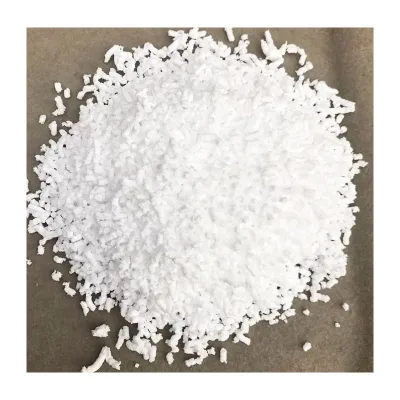
Technical specifications for these materials vary significantly based on the intended application. The observed product data lists specific model numbers such as 1502 and 1712, which often correspond to specific grades of synthetic rubber used in industrial compounding. In addition to the polymer type, buyers should scrutinize the physical form of the material. The data shows products available as "Powder" with a "Solid Content" of 50%±2 and "Volatiles%≤ 0.5," alongside sheet forms described as "Pure Gum Rubber Sheet and Fabric." The "Medium" attribute for some listings specifies "Pure Gum Rubber Sheet and Fabric," which suggests a base material ready for further processing or direct use in flooring and industrial applications.
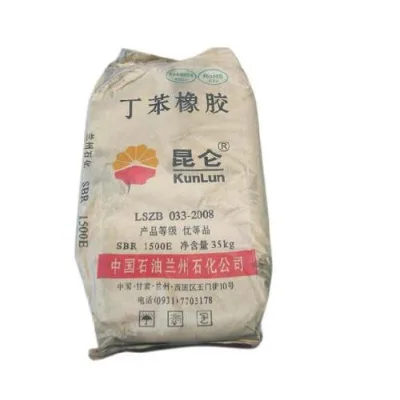
The physical dimensions and packaging are equally vital for logistics planning. One observed specification lists a size of 50"130" and another at 51"130", indicating that sheet materials are often sold in large rolls or sheets. The packaging standard varies from "35kg /Bag" to "Nylon Bag" and "Carton," with a specific weight observation of 25kg for certain sheet products. When evaluating a supplier, the buyer must confirm that the "prod_model" matches the specific grade required for cold resistance, as model numbers like NS-001, NS-005, and NS-038 may denote different density or additive profiles. The "Standard" attribute in the data includes values like "22.5-24.5" and "37cm37cm37cm," which likely refer to density ranges or packaging dimensions rather than a universal material standard, necessitating direct verification with the supplier to ensure the physical properties align with the buyer's cold weather requirements.
Compliance, Certification, and Quality Assurance
Ensuring that the sourced cold resistant rubber meets regulatory and quality standards is a non-negotiable aspect of B2B procurement. The provided product data highlights several certifications and standards that buyers should look for to validate product integrity. Specifically, the attribute "Certification: SGS" appears in the listings, indicating that third-party inspection services have been utilized for certain products. Buyers should request current SGS reports to verify that the material's cold resistance properties have been independently tested and validated.
In addition to third-party certifications, the data references "RoHs" compliance. While RoHs is primarily associated with restricting hazardous substances in electronics, its presence in rubber product listings suggests that the manufacturer adheres to strict environmental and chemical safety guidelines. For applications in medical, household, electronic, vehicle, agricultural, and industrial sectors, as noted in the "Usage" attributes, compliance with chemical restrictions is paramount. Buyers must verify that the "RoHs" claim applies to the specific SBR grade being purchased, as different additives used to enhance cold resistance might introduce restricted substances if not properly managed.
The "Standard" attribute in the data includes a range of "22.5-24.5," which may refer to a specific density or hardness metric, though it is not explicitly defined as a universal standard like ASTM or ISO in the provided text. However, the background information mentions "ASTM D395," a standard test method for rubber property determination. While this is noted as low-confidence background, it serves as a reminder that buyers should verify if the supplier conducts testing according to recognized international standards. The absence of explicit ASTM or ISO references in the high-confidence facts means that buyers cannot assume compliance without direct confirmation. Instead, procurement teams should request test reports that explicitly cite the testing methodology used to determine cold resistance, ensuring that the "Cold-resistant" feature claimed in the product attributes is backed by empirical data.
Furthermore, the "Condition: New" attribute confirms that the products are fresh, which is crucial for rubber materials that may degrade over time. Buyers should also check for any specific "prod_standard" values that might indicate a proprietary or regional standard. The location of origin, listed as "Hebei China" or "China(Mainland)," suggests a concentration of manufacturing in this region, which is known for rubber processing. However, the buyer must ensure that the "prod_origin" matches the country of manufacture stated on the commercial invoice to avoid any discrepancies in trade compliance or origin-based tariffs.
Cost Drivers and Pricing Dynamics
The pricing landscape for cold resistant styrene butadiene rubber is highly variable, as evidenced by the observed listed price range of $4 to $26,159.99. This wide disparity is not indicative of a single product type but rather reflects the diversity of forms, quantities, and processing levels available in the market. The lower end of the price spectrum, around $4, likely corresponds to small samples, specific additives, or powder forms with lower solid content, while the higher end, exceeding $26,000, suggests bulk industrial orders, specialized sheeting, or complete production runs.
Several factors drive these costs. First, the "Material" composition is a primary driver. SBR is a synthetic rubber, and its price is influenced by the cost of styrene and butadiene monomers, which fluctuate with global oil prices. The data also lists "Natural Rubber" and "Neoprene" as alternative materials, which have different cost structures. Neoprene, for instance, is generally more expensive than SBR due to the complexity of its synthesis, so a buyer seeking "cold resistant" properties must ensure they are not inadvertently priced for a premium material when SBR suffices.
Second, the "Customization" attribute plays a significant role in pricing. Products marked as "Customized" or "Available" for customization often carry a premium due to the additional engineering and tooling required. The data shows "Customization: Available" and "Customized: Customized," indicating that buyers can request specific formulations, such as adjusted "Solid Content" or specific "Volatiles%" levels. These bespoke requirements increase the unit cost but may be necessary for specific cold resistance applications.
Third, the "MOQ" (Minimum Order Quantity) range of 1 to 100 units affects the effective price per unit. A buyer ordering a single unit may pay a significantly higher price per kilogram compared to a buyer ordering 100 units or a full container load. The "prod_packing" also influences cost; "35kg /Bag" and "Nylon Bag" packaging may incur different handling and shipping costs compared to bulk "Carton" or palletized shipments. Additionally, the "Delivery Period" of 7-30 days suggests that lead time variability can impact pricing, with rush orders potentially incurring expedited shipping fees.
Finally, the "Usage" scope impacts cost. Products designed for "Medical, Household, Electronic, Vehicle, Agricultural, Industrial" applications often require higher purity and stricter quality control, driving up the price. In contrast, products intended for "Rubber Floor Covering, Industrial, Printing" may be more cost-effective. Buyers should analyze their specific application needs to avoid overpaying for unnecessary features. The "Appearance: Powder" and "Solid Content: 50%±2" specifications also suggest that the form factor (powder vs. sheet) will significantly alter the cost structure, as processing and packaging differ between these forms.
Typical Applications and Performance Expectations
The versatility of cold resistant styrene butadiene rubber is evident in the diverse "Usage" categories listed in the product data. These applications range from "Diving" and "Medical" to "Vehicle," "Agricultural," and "Industrial" uses. The "Feature: Warm" and "Feature: Cold-resistant" attributes highlight the material's primary function: maintaining flexibility and integrity in low-temperature environments. For "Diving" applications, the "Type: Neoprene" and "Size: 50"*130"" specifications suggest that while SBR is the core keyword, Neoprene is often the preferred material for thermal insulation in water, though SBR variants may be used for specific gear components.
In the "Vehicle" and "Industrial" sectors, the "Feature: Wear-resistant, Heat-resistant, Cold-resistant" combination is critical. The data indicates that some products are designed for "Rubber Floor Covering," which requires durability against heavy loads and temperature fluctuations. The "Medium: Pure Gum Rubber Sheet and Fabric" suggests that these materials are used as base layers or protective coverings in industrial settings where cold resistance is necessary to prevent cracking or brittleness.
The "Suitable Venue: Low Temperature and Cold Regions" attribute explicitly targets geographic and climatic applications. This is particularly relevant for "Agricultural" and "Outdoor" uses where equipment and protective gear must withstand freezing conditions. The "Season: Winter" attribute reinforces this, indicating that products are specifically formulated or marketed for winter conditions. For "Medical" and "Household" applications, the "Gender: Women and Men" and "Color: Black and White" attributes suggest that the material is used in consumer goods like gloves, mats, or protective clothing where comfort and thermal regulation are important.
The "Purpose: Asphalt Modifier" is a unique application noted in the data, suggesting that SBR is used to enhance the flexibility of asphalt in cold climates, preventing cracking in road surfaces. This highlights the material's utility beyond just rubber goods, extending into construction and infrastructure. The "Appearance: Powder" form is likely used in this context, where the rubber is mixed into the asphalt binder. Buyers should ensure that the specific "prod_model" they select matches the application's performance requirements, as a model designed for "Asphalt Modification" may have different properties than one designed for "Diving" or "Floor Covering."
Supplier Evaluation and Selection Criteria
Selecting the right supplier for cold resistant styrene butadiene rubber requires a rigorous evaluation process based on the available data points. The "prod_origin" is consistently listed as "China" or "Hebei China," indicating a concentrated supply base. Buyers should verify the specific factory location and capacity to ensure consistent supply. The "Delivery Period: 7-30 Days" suggests that lead times can vary, and buyers should establish clear expectations regarding production schedules and shipping timelines.
The "Customization" capability is a key differentiator. Suppliers offering "Customization: Available" and "Customized: Customized" options provide greater flexibility to meet specific technical requirements. Buyers should assess the supplier's ability to adjust "Solid Content," "Volatiles%," and other chemical properties to match their application needs. The "MOQ" range of 1-100 indicates that suppliers cater to both small-scale buyers and large industrial clients. Buyers should negotiate terms that align with their order volume to optimize costs.
Quality assurance is another critical factor. The presence of "Certification: SGS" and "Standard: RoHs" in the data suggests that some suppliers have established quality control systems. Buyers should request evidence of these certifications and verify their validity. The "Condition: New" attribute is a basic requirement, but buyers should also inquire about storage conditions and shelf life to ensure the material has not degraded.
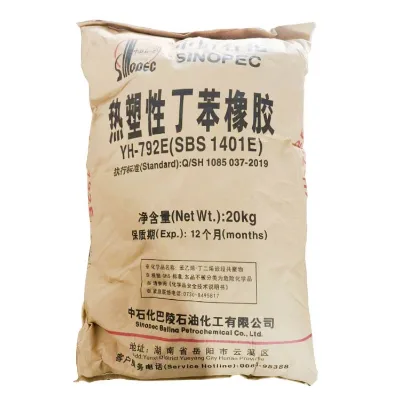
The "prod_packing" methods, such as "35kg /Bag," "Nylon Bag," and "Carton," indicate that suppliers have established packaging protocols. Buyers should evaluate whether these packaging methods are suitable for their logistics chain and whether they offer protection against moisture and temperature extremes during transit. The "Weight: 25kg" observation provides a benchmark for packaging consistency, which is important for inventory management and shipping cost calculations.
Finally, the "Appearance: Powder" and "Color: White Sheet" attributes suggest that suppliers offer a variety of product forms and colors. Buyers should ensure that the supplier can consistently deliver the specified appearance and color, as these may be critical for branding or functional requirements. The "Type: Neoprene" and "Type: Neoprene Material" listings indicate that some suppliers may offer multiple rubber types, so buyers must clearly communicate their requirement for SBR to avoid receiving the wrong material.
Long-Term Procurement and Supply Chain Resilience
Sourcing cold resistant styrene butadiene rubber is not just a one-time transaction but a long-term strategic partnership. The "Lead Time" of 7-30 days suggests that supply chain stability is crucial. Buyers should develop contingency plans for potential disruptions, such as raw material shortages or logistical delays. The "Location: Hebei China" concentration means that regional factors, such as weather or policy changes, could impact the supply chain. Diversifying suppliers or maintaining safety stock can mitigate these risks.
The "Customization" aspect offers opportunities for long-term collaboration. By working with suppliers to refine formulations, buyers can develop proprietary products that offer superior cold resistance. This collaboration can lead to cost savings and a competitive advantage in the market. The "Standard: 22.5-24.5" and other technical parameters should be documented and agreed upon in long-term contracts to ensure consistency.
Quality control should be an ongoing process. Regular audits and third-party testing, such as SGS, should be scheduled to maintain product integrity. The "Certification: SGS" and "Standard: RoHs" should be re-verified periodically to ensure continued compliance. The "Usage" diversity suggests that the material may be used in multiple applications, so buyers should monitor performance across all use cases to identify any potential issues early.
Finally, the "Price" volatility observed in the $4 to $26,159.99 range underscores the need for flexible procurement strategies. Buyers should consider long-term contracts with price adjustment mechanisms to manage cost fluctuations. The "MOQ" flexibility allows buyers to scale orders up or down based on demand, providing operational agility. By focusing on these long-term considerations, buyers can build a resilient supply chain that ensures a steady flow of high-quality, cold resistant styrene butadiene rubber.
Comparative Analysis of Product Attributes
To facilitate informed decision-making, the following table summarizes key product attributes observed in the market data, highlighting the variations that buyers must consider when sourcing cold resistant styrene butadiene rubber.
| Attribute Category | Observed Values | Implications for Buyer |
|---|---|---|
| Material Type | Styrene Butadiene Rubber, Natural Rubber, Neoprene | Verify specific polymer; SBR is the target, but Neoprene/Natural are common alternatives. |
| Form Factor | Powder, Pure Gum Rubber Sheet, Fabric | Powder is for mixing (e.g., asphalt); Sheets are for flooring/coverings. |
| Cold Resistance | Cold-resistant, Warm, Suitable for Low Temp/Cold Regions | Essential for winter applications; verify test data for specific temperature limits. |
| Certifications | SGS, RoHs | Request current reports; RoHs indicates chemical safety, SGS indicates quality verification. |
| Packaging | 35kg/Bag, Nylon Bag, Carton, 25kg Weight | Check compatibility with logistics; weight affects shipping costs. |
| Customization | Available, Customized | Enables tailored formulations; may increase cost and lead time. |
| Origin | Hebei China, China(Mainland) | Concentrated supply base; verify factory location and capacity. |
| Lead Time | 7-30 Days | Plan inventory accordingly; variability requires buffer stock. |
| Usage Scope | Diving, Medical, Vehicle, Industrial, Asphalt Modifier | Match product model to specific application; avoid over-specifying. |
This comparison underscores the importance of precise specification matching. Buyers must ensure that the "Material" is SBR, the "Form" suits their application, and the "Certifications" meet their regulatory needs. By carefully evaluating these attributes, buyers can secure a reliable supply of cold resistant styrene butadiene rubber that meets their technical and operational requirements.
FAQs
What materials are used for cold resistant styrene butadiene rubber?
The product data lists Styrene Butadiene Rubber and Natural Rubber as primary materials. Some listings also specify Neoprene or Synthetic Rubber with a pad. Buyers must verify the raw material field to ensure the correct polymer type for cold resistance.
Which certifications are available for these rubber products?
Available certifications include SGS and RoHs compliance. These indicate third-party inspection and adherence to chemical safety guidelines. Buyers should request current reports to validate that the specific grade meets regulatory requirements for medical or industrial use.
Can I find cold resistant styrene butadiene rubber with custom packaging?
Customization is available for various product attributes including packaging. Observed packing options include 35kg bags, nylon bags, and cartons. Buyers can request specific packaging configurations to suit their logistics needs while maintaining the material's cold-resistant properties.
What is the typical lead time for delivery of these materials?
The delivery period ranges from 7 to 30 days for these products. This timeline applies to standard orders from manufacturers in China. Buyers should confirm specific lead times with suppliers as rush orders may incur additional fees or require different scheduling.
Where are cold resistant styrene butadiene rubber products manufactured?
Products originate from Hebei China and China Mainland. This region is a known hub for rubber processing. Buyers should verify the country of manufacture on the commercial invoice to ensure compliance with trade regulations and origin-based tariffs.
What specifications define the size and form of these rubber sheets?
Specifications include sizes like 50 by 130 inches and 51 by 130 inches. Forms vary from powder with 50 percent solid content to pure gum rubber sheets. Buyers must match the model number and physical form to their specific application requirements.